Turning four disconnected tools into one product vision
Pave, Design Manager, 2026

Background
We were calling Pave an agentic platform to power all your compensation workflows. In reality we were four separate products stacked into a left nav, each built by its own team, solving its own workflow, reading from its own data. We preached about becoming a unified platform, but for every new feature, the fastest approach was to find a spot in the app to add a page or a tab. Teams were building duplicative experiences because coordination would take too long. Meanwhile, leadership wanted an agent button on every page, not a rethink of the foundation those agents would need to work well.
My approach
I wanted to set a new course before teams added more debt to the product, but trying to pause the roadmap in favor of a full redesign was not realistic. No on asked me to fix this, there was no budget or team set aside for it. Instead of trying to get approval for a project plan, I decided to focus on three things I could influence:
Change the conversation from feature requirements to cross-platform principles
Give teams tools to build toward a shared product
Create momentum through tactical work
Changing the conversation
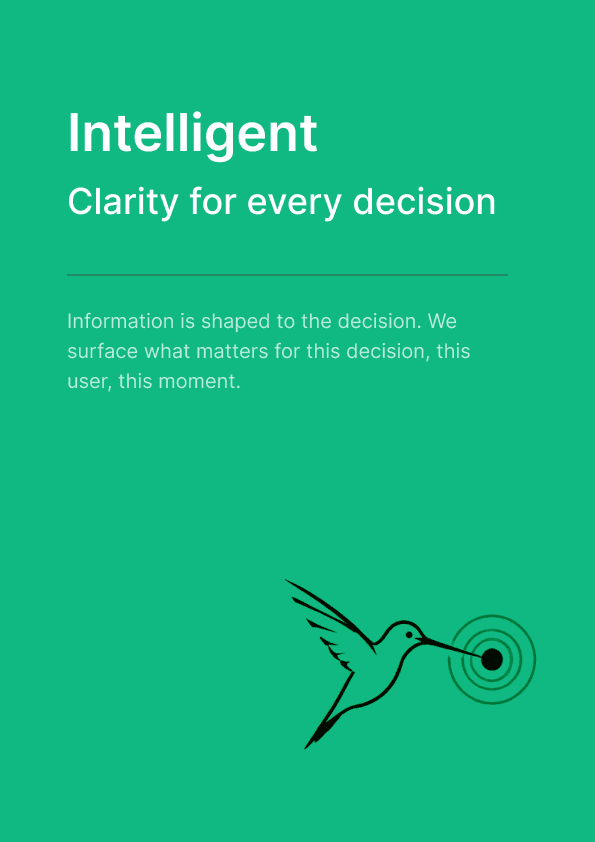
I ran a workshop with product and design to brainstorm a shared set of principles that apply to our entire platform. The conversation forced us to be more specific. We know we describe our platform as intelligent, but in what ways? We know we want to build simple, easy-to-use workflows, but what's the trade off for companies that require more complex features? The workshop was the first time we had a forum to discuss openly.
I captured and drafted a set of five principles and ran a second workshop for a dress-rehearsal. As a team, we brainstormed what it would look like to apply these principles to our product decisions. The brainstorm sparked new thinking and teams started proposing solutions that weren't tied to their own product area. We built the principles into our PRD template, so they're present in day-to-day work.


Creating the tools
I organized a design week, bringing our distributed team from SF and Japan into one room in New York. I split the work into three streams and staffed designers based on their interests and strengths: a user journey and vision artifact, an IA proposal to support that vision long term, and revamped team rituals to keep product and design working this way going forward.
The most rewarding part of the week was watching designers take advantage of their time together, and shift from identifying problems to driving solutions. My goal was to empower them to lean on each other for support and be strong advocates for design on their respective teams.


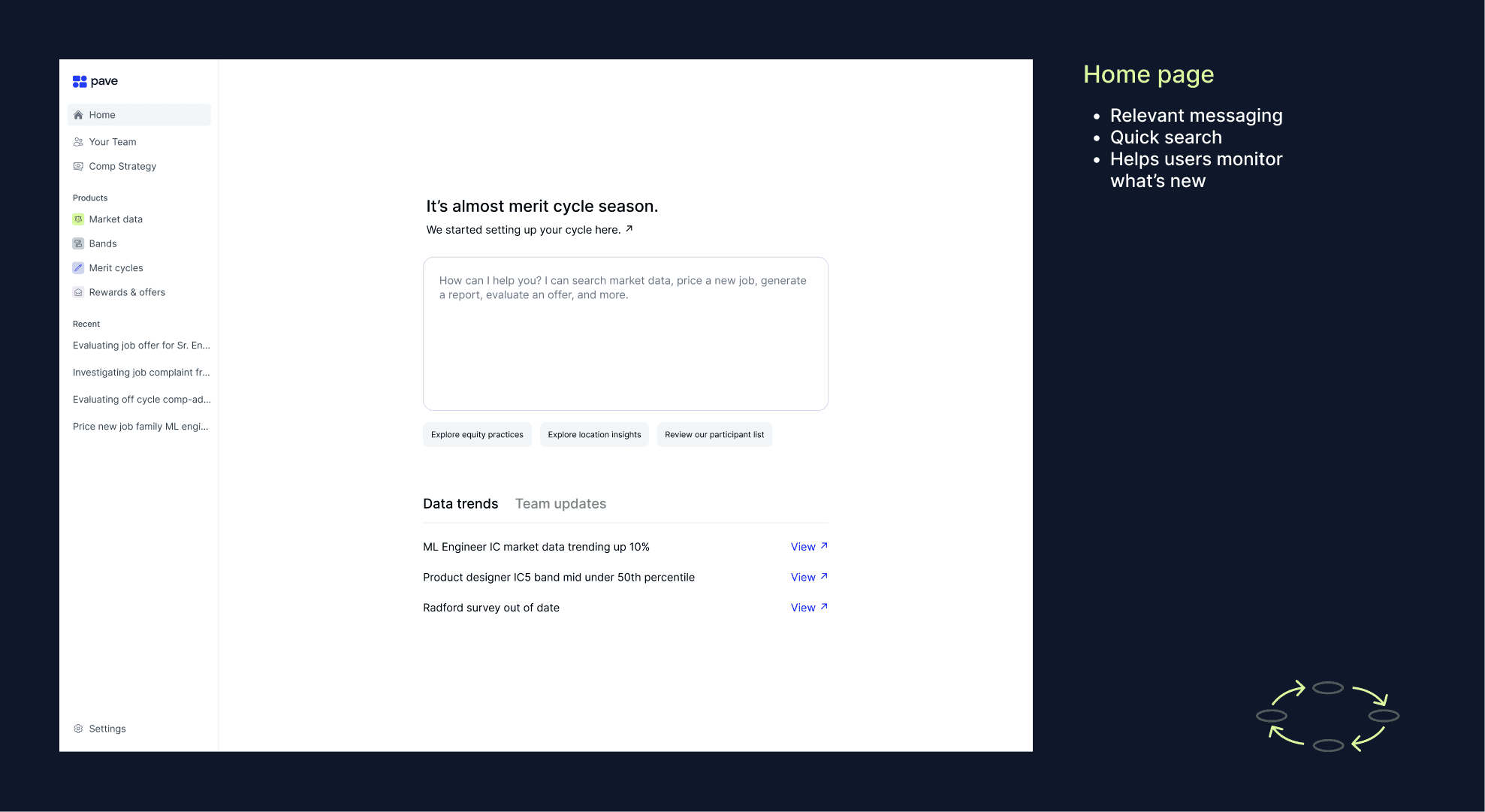
One critical output from design week was a proposal for a new information architecture. Pave's navigation had always been organized around how we package and sell products, not the customer. One designer outlined a journey centered around our users and the compensation lifecycle. We used that to develop a compelling alternative: a navigation built around what customers are trying to do, not what we have to sell them.


Building momentum
The designers packaged their work from design week and presented it to the full product team, giving our partners something concrete to react to. One PM who had been working in a silo for months said, "we need this," about the new framework. The artifacts have since made their way into other teams' project documents as a reference point, and the presentation did something else unplanned: it made the resourcing case for us. Seeing the scope of the vision, the head of design started conversations about the headcount we'd need to actually build it.


Impact
Design week surfaced compensation philosophy, a critical concept the company had deprioritized for years despite its importance. I used the vision work as something tangible to rally the team around.
I now am driving a cross-pod work stream to ensure that we build a compensation philosophy experience that is a centralized layer in our platform.
Limor Zisbrod
© 2026–∞